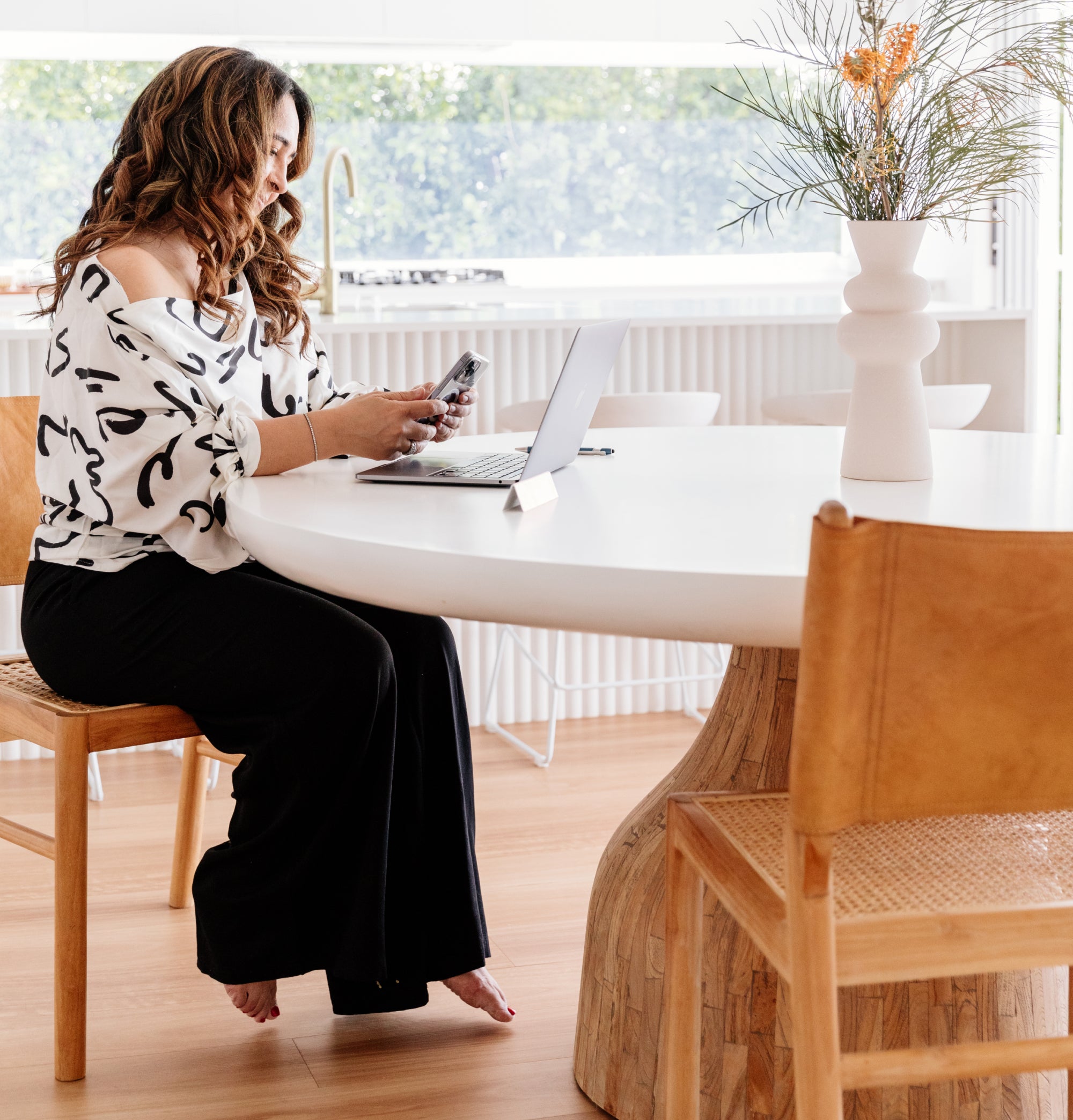
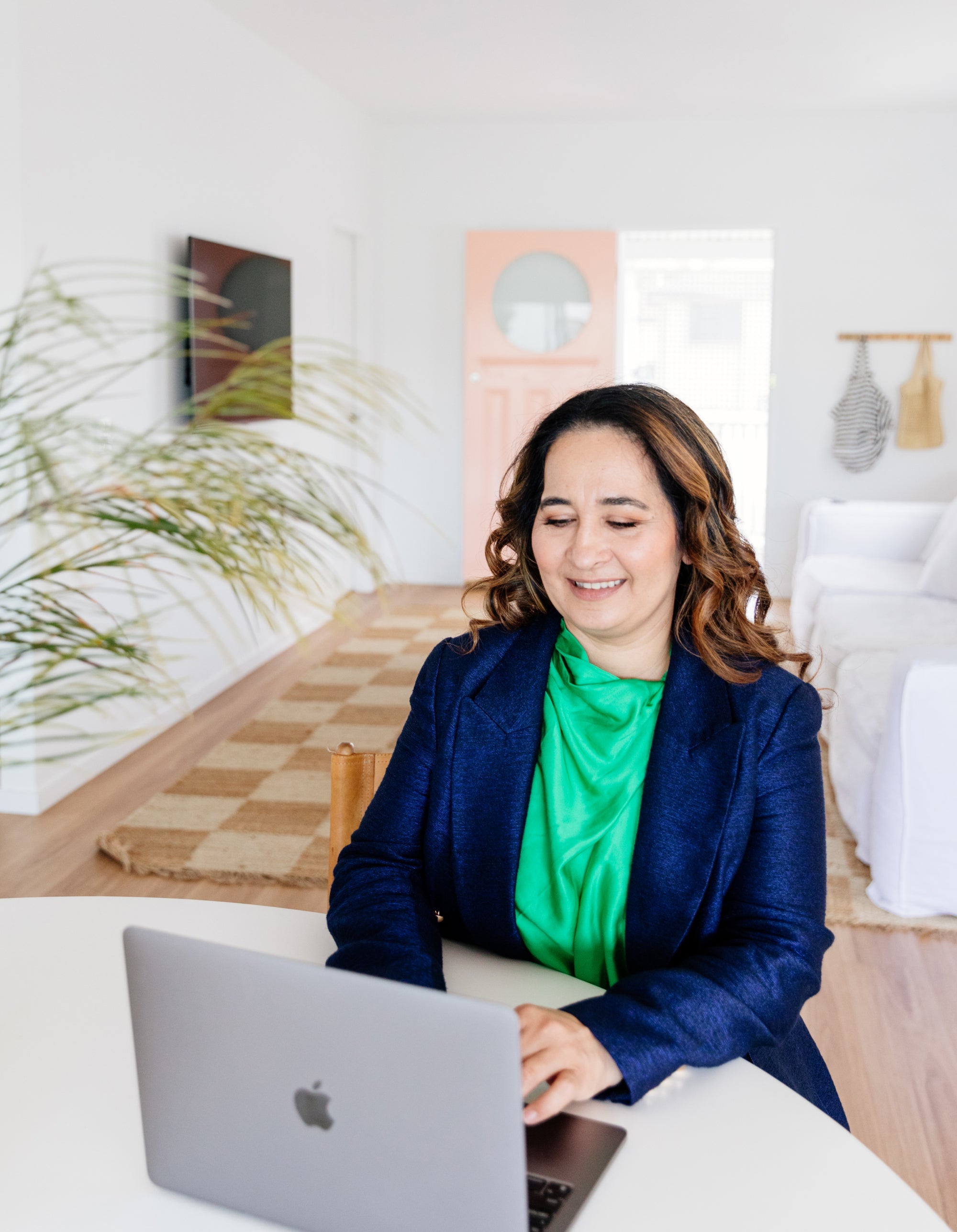
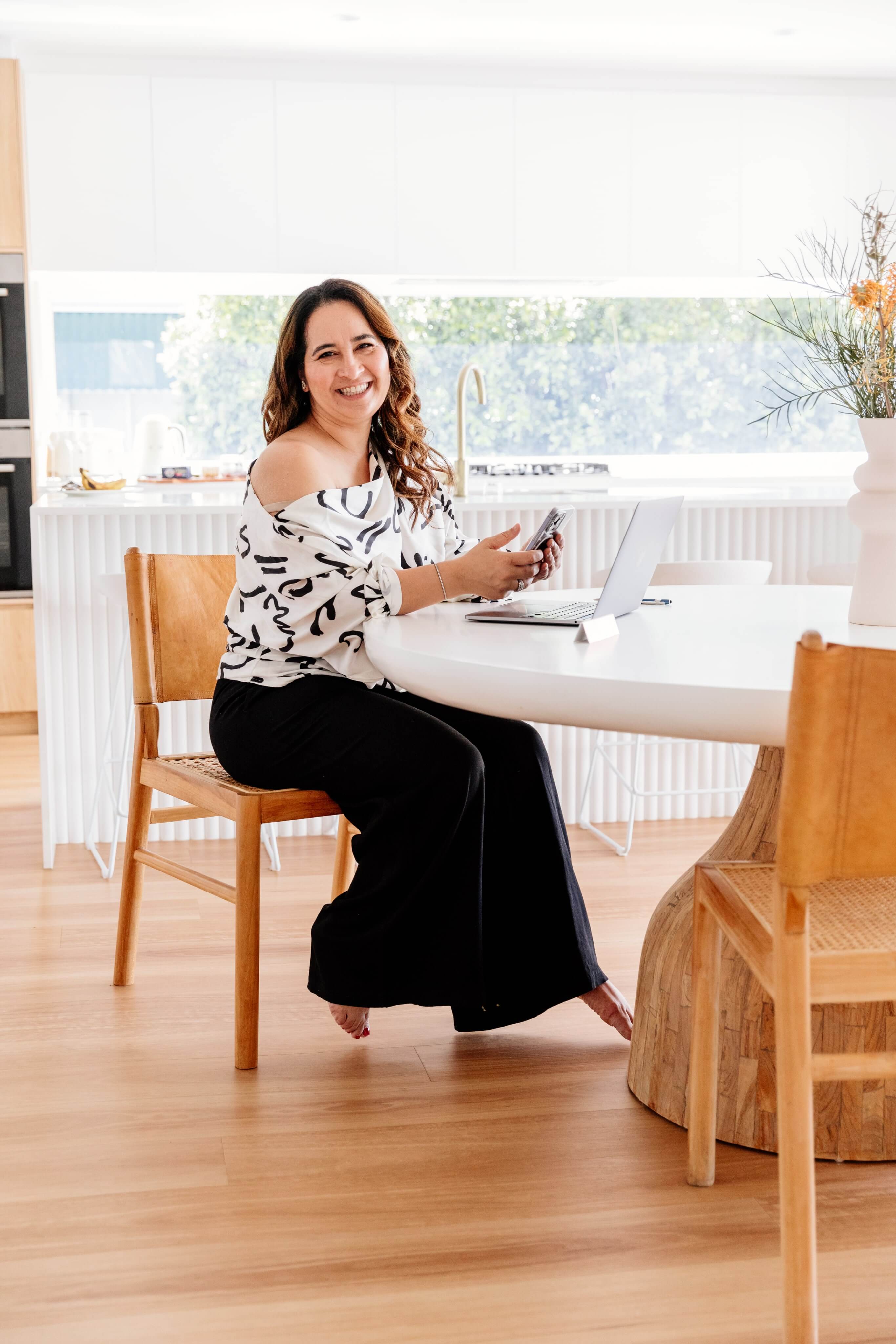


Seven years ago, Foundd Legal started with a laptop, a kitchen bench and a very impractical gamer headset.
It was September 2019. I was still working full time, raising two kids, running a side business and building Foundd in whatever cracks I could find.
Six months later, the world stopped. Everything moved online. Suddenly, businesses everywhere were doing the things I had just started helping people with: taking payments from strangers on the internet, running programmes over Zoom and selling digital products to people they would never meet.
Seven years later, a lot has changed. Some things really haven't.
- What year one of Foundd Legal actually looked like, from a kitchen bench in September 2019.
- What happened when COVID hit six months later and every business moved online at once.
- The two things I got completely wrong in the first year.
- What has changed in Australian online business law in seven years, and what has not changed at all.
- What is next, and what we are doing to mark the seventh birthday.
Table of contents
- Year one was a kitchen bench
- Then, six months in, the world stopped
- The part I could not explain at the time
- Two things I got completely wrong in year one
- What has changed in seven years
- What has not changed at all
- What I am actually proudest of
-
What is next
Year one was a kitchen bench
In September 2019 I started Foundd Legal with a laptop, a kitchen desk, and my son's gamer headset.
That was the whole setup.
I was working full time as an in-house lawyer, so Foundd happened in the cracks. I took calls in my lunch break. I worked on it at night, once the kids were in bed.
They were eight and ten at the time. There was football twice a week and games on Saturdays, sometimes Sundays as well. There were dance classes. There was all the cooking, and all of the mental load that comes with two children and a full-time job, which is a job of its own that never appears on anybody's CV.
I was also still running a side hustle selling beauty products, so mornings were picking and packing before work, and the rest of it was socials, blogs and briefing SEO people.
I gave myself a properly bad back that year, hunched over a bench that was never designed to be a desk.
Then, six months in, the world stopped
I started in September. By March 2020 everything had shut, and then everything moved online at once.
I had not planned for that. Nobody had.
But almost overnight a great many people were building businesses from their own kitchen benches. Taking payments from strangers on the internet. Running programmes over Zoom. Selling digital products to people they would never meet.
And quietly hoping nobody would ask them for a contract.
Which was, as it turned out, exactly the thing I had just started making.
The part I could not explain at the time
Here is what I still find strange about that period: I was exhausted, and I was happier than I had been in years.
On paper the two side businesses looked identical. Same hours. Same tiredness. Same kitchen.
The difference was direction. The beauty business was tied to somebody else's brand, and I did not really get a say in where it went. I was working extremely hard on somebody else's idea of what it should be.
Foundd was mine. Every bad decision in it was mine as well, which sounds like a burden and is actually the opposite.
Setting up Foundd was how I found me.
I know how that reads. It is also the truest sentence I can write about the last seven years.
If you are in the exhausting part right now, this is the bit nobody tells you. Exhaustion in service of something that is yours does not feel the same as exhaustion in service of something that is not. It is not less tiring. It is just survivable in a way the other one never is.
Two things I got completely wrong in year one
I thought people wanted a lawyer.
They did not. They wanted to stop feeling stupid about legal.
Those are not the same thing, and it took me an embarrassingly long time to hear the difference. Someone would book a call and, halfway through, say some version of "I know I should have done this ages ago." Every time.
That sentence is not a legal problem. It is a shame problem, and no amount of correct advice fixes it.
I thought that if I explained the law well enough, people would act.
They do not. People act when the thing in front of them is small enough to finish.
That is the entire reason I stopped writing long, careful memos and started building templates. Not because a template is better law. Because a template is finishable, and a memo is a homework assignment.
What has changed in seven years
A great deal, and faster in the last two than in the first five.
Online business grew up.
In 2019 I was explaining to people why a digital course needed terms and conditions. Now they arrive already knowing they need them and asking which one.
AI arrived and changed the questions.
Almost every week now someone asks me who owns a logo that Midjourney made, or whether they can put client information into ChatGPT, or whether the marketing copy AI wrote for them is a claim they can actually back up. A few years ago none of those questions existed.
Privacy stopped being a formality.
Since 10 June 2025 Australia has had a serious invasion of privacy tort, which gives individuals real grounds to pursue damages. And from 10 December 2026, businesses have to disclose when software is making decisions about people. The privacy policy you copied from somewhere in 2022 is not going to carry you through that.
Trade marks became mainstream.
Seven years ago most small business owners believed an ABN or a registered business name protected their brand. That misunderstanding has not disappeared, but far more people now know to ask the question before they launch rather than after somebody copies them.
And a niche found me.
I did not set out to work with cosmetic clinics and the AHPRA and TGA rules that govern them. It happened because those businesses were being asked to market like beauty brands while being regulated like healthcare, and almost nobody was explaining the difference in plain English.
What has not changed at all
The mistakes.
People still start without a contract
And only go looking for one after something has already gone wrong. The client who goes quiet on an invoice. The supplier who uses their photographs. The customer who wants a refund in month five of a six-month programme and reads the terms far more carefully than the business owner ever did.
People still think being small makes them invisible.
It does not. It makes them easier to copy, and far less able to absorb the cost when it happens.
People still put the legal part last.
Behind the branding, the website and the launch. I understand why. It is the least enjoyable part of building a business, and it has no visible payoff at all until the day it has an enormous one.
And people still apologise for asking.
Seven years, and that is the one I have not managed to fix.
What I am actually proudest of
Not a filing. Not a matter. Not a result.
It is the number of people who have told me they finally sent a contract to a client without apologising for it first.
That was the real job the whole time. I could not see it from the kitchen bench.
What is next
More of the same, done better.
Privacy and AI are going to be the story of the next eighteen months for Australian online businesses, so that is where a lot of my attention is going. There is a real deadline on 10 December 2026 and most people do not yet know it exists.
Beyond that, the same thing I have been doing since the kitchen bench. Making legal small enough to finish.
Thank you
Foundd Legal turns seven on 4 September.
To mark it, we are running an exclusive offer to our community. Want in? Just sign up to our newsletter.
Sign up to the Foundd Legal newsletter to receive the birthday offer and stay up to date with practical legal guidance for online businesses.
And if you have been here since the early days, thank you. Sincerely. Seven years is a lot of Thursdays.
About the Author

Riz is the Founder & Director of Foundd Legal, a lawyer with 20+ years' experience and a long history of building online and ecommerce businesses.
She helps creatives and online business owners protect and grow their businesses with clear, practical legal tools that actually make sense.
SIGN UP TO OUR FREE BUSINESS CHECKLIST
Disclaimer
We do our best to keep this content accurate and up to date, but laws change, interpretations evolve, and the internet isn't perfect. Occasionally, information may be outdated or contain errors.
This content is for general information only and isn't legal advice. If you choose to rely on it, you do so at your own discretion. For advice specific to your business, you'll need support tailored to your situation.
All rights reserved. © Foundd Legal Pty Ltd